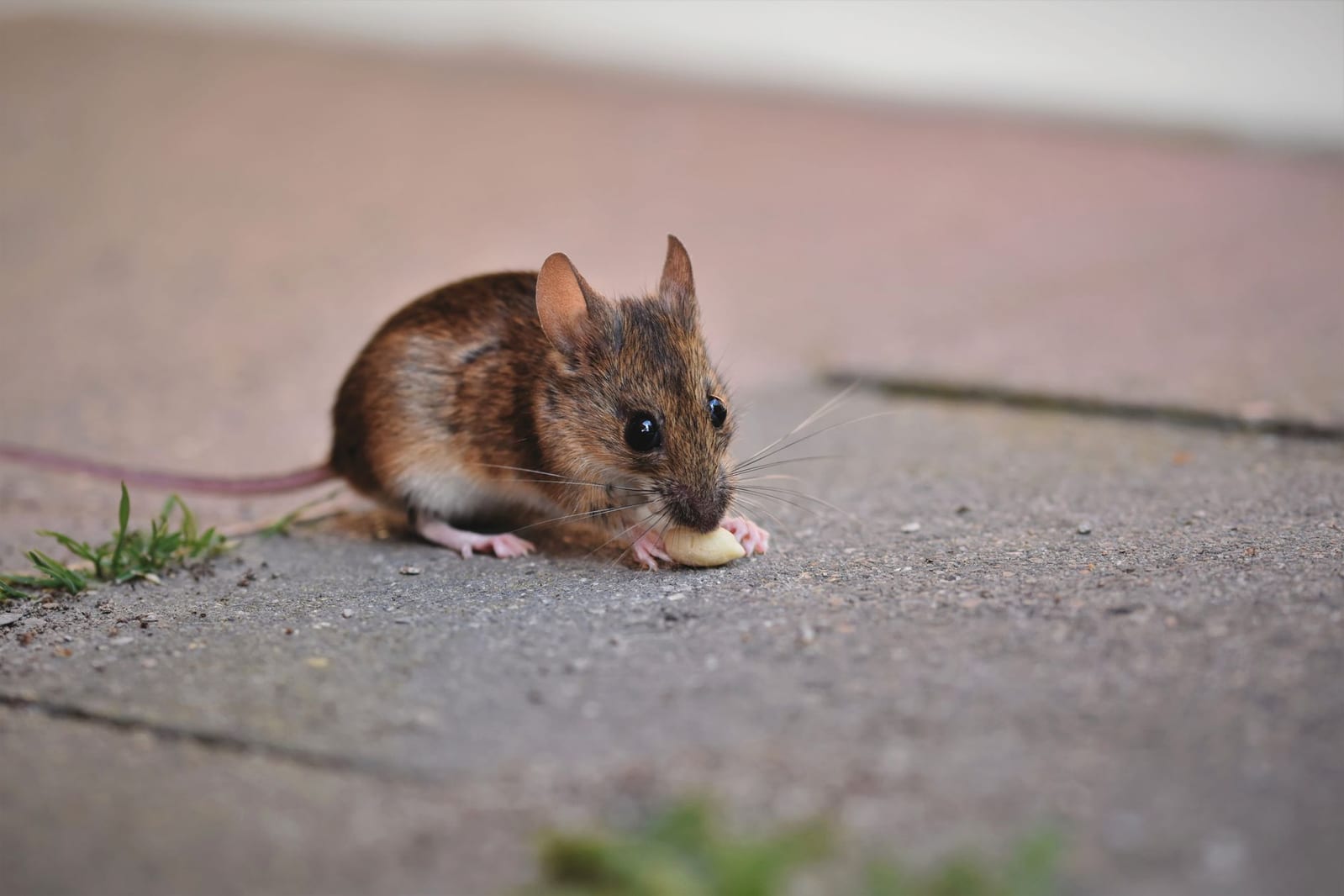
Inwood sits at Manhattan's northern tip, and its rodent picture is shaped by that geography as much as by its buildings. Inwood Hill Park's tree cover and rocky terrain give Norway rats — the burrowing species behind almost every NYC rodent call — outdoor harbourage that most Manhattan neighbourhoods simply don't border. Blocks closest to the park, and along Dyckman Street where the commercial corridor meets the park edge, see outdoor rat pressure that fades a few blocks south toward Washington Heights.
Indoors, the picture is a classic pre-war one. The apartment buildings along Dyckman Street and Seaman Avenue have the deep wall voids and shared plumbing chases that let mice travel building-to-building through a riser rather than staying contained to one kitchen — treating a single unit without checking the line above and below it rarely holds.
That combination — outdoor burrow pressure from the park boundary, indoor riser-driven spread through pre-war stock — means an Inwood rodent job usually needs both an exterior check near the park-facing side of a building and an interior inspection of the full vertical line, not just the apartment that called.
What actually keeps rats and mice out of a New York City apartment?
Sealing entry points is the foundation of rodent control: the CDC notes a mouse can fit through a hole the width of a pencil — about 1/4 inch or 6 millimeters across — so even gaps that look far too small for a rodent are enough to let mice in. Trapping or baiting without sealing these openings only treats the symptom. (CDC — Seal Up to Prevent Rodents)
In New York City, property owners are legally required to keep rats out of homes. The Health Department designates Rat Mitigation Zones — areas of high rat activity where City agencies concentrate resources — and lets residents report a rodent problem online through 311 to trigger an inspection. (NYC Health — Rats)
The US EPA's prevention guidance is to deny rodents food, water and shelter, then seal holes inside and outside the home to keep them out — something as simple as plugging small openings with steel wool or patching holes in interior and exterior walls. Removing nesting sites such as leaf piles and deep mulch removes the harborage rodents depend on. (US EPA — Identify and Prevent Rodent Infestations)
Mice and rats are recognized indoor asthma triggers, not just a nuisance: NYC Housing Preservation & Development lists mice and rats among the common allergens that can cause or worsen asthma, and under Local Law 55 of 2018 owners of buildings with three or more apartments must keep tenants' units free of pests and the conditions that attract them. (NYC HPD — Indoor Allergen Hazards (Mold and Pests))
Trapping vs baiting vs exclusion — what's the right rodent strategy?
| Snap trapping | Rodenticide baiting | Exclusion / sealing | |
|---|---|---|---|
| Where the rodent ends up | In the trap — easy to find and remove | Often inside walls or voids, out of sight | Kept outside before it ever enters |
| Secondary-poisoning risk to pets and wildlife | None | Possible if a poisoned rodent is eaten | None |
| Closes the entry point | No — new rodents can re-enter | No — new rodents can re-enter | Yes — pencil-width gaps sealed per CDC guidance |
| Best role | Knock down an active indoor population | Reduce numbers where trapping is impractical | Permanent prevention; pairs with any method |
How much does rat & mouse control cost in NYC?
$200–$1,200
One-time baiting: $200–$500. Exclusion (baiting + entry-point sealing): $400–$900. Ongoing monitoring: $100–$200/month. NYC per-treatment overall: $300–$1,200 (avg ~$475). National per-visit average: $345 (range $216–$495).
| One-time baiting | $200–$500 per treatment |
| Exclusion (baiting + sealing) | $400–$900 per treatment |
| Ongoing monitoring | $100–$200 per month |
Market range — not our quote
This is a market range synthesised from published cost guides — not a quote from this provider. The actual price depends on an in-person or photo-based inspection.
Angi's $345 average (range $216–$495) is the only tier-1, NYC-geo-targeted figure found and is notably lower than the tier-2 NYC blogs' $300–$1,200 claim. Both are shown — do not collapse into a single misleadingly precise number.
What drives the price
- Baiting-only vs full exclusion (sealing entry points)
- Number of visits needed for heavy infestation (3–5 visits can total $700–$1,500)
- Building type / density
- Ongoing monitoring plan vs one-off
Signs you have a rodent control problem
- Burrow holes or rub marks along foundations closest to Inwood Hill Park or the Dyckman Street corridor
- Droppings or gnaw marks appearing in more than one apartment on the same vertical line
- Scratching in walls or ceilings at night, especially in units backing onto shared risers
- Smear marks along baseboards or pipe chases in pre-war Dyckman Street/Seaman Avenue buildings
- New rodent activity shortly after construction or park-adjacent ground disturbance nearby
Why Inwood sees this
Inwood is the only Manhattan neighbourhood bordering true forest — Inwood Hill Park — which gives it outdoor rat harbourage most of the borough doesn't have to contend with.
Pre-war apartment stock along Dyckman Street and Seaman Avenue has deep voids and shared plumbing that let rodents move between units, which is why a single-apartment treatment often doesn't hold on its own.
NYC Health Code obligations to eliminate rat harbourage apply to every building owner, and DOHMH takes rodent complaints through 311 from any Inwood address, park-adjacent or not.